Exploring the Grand Canyon National Park by RV is one of the most rewarding ways to experience this iconic destination. There’s something different about waking up near the canyon, stepping outside with a cup of coffee, and knowing one of the most breathtaking landscapes in the world is just minutes away.
But one decision shapes your entire trip more than anything else:
Do you stay inside the park, or outside and drive in each day?
Both options offer incredible experiences—but they feel very different. This guide will walk you through each in detail so you can confidently choose what fits your travel style, comfort level, and bucket list vision.
Staying Inside the Grand Canyon: What It’s Really Like
Camping inside the park is about proximity and immersion. You’re not planning your day around the canyon—you’re already in it.
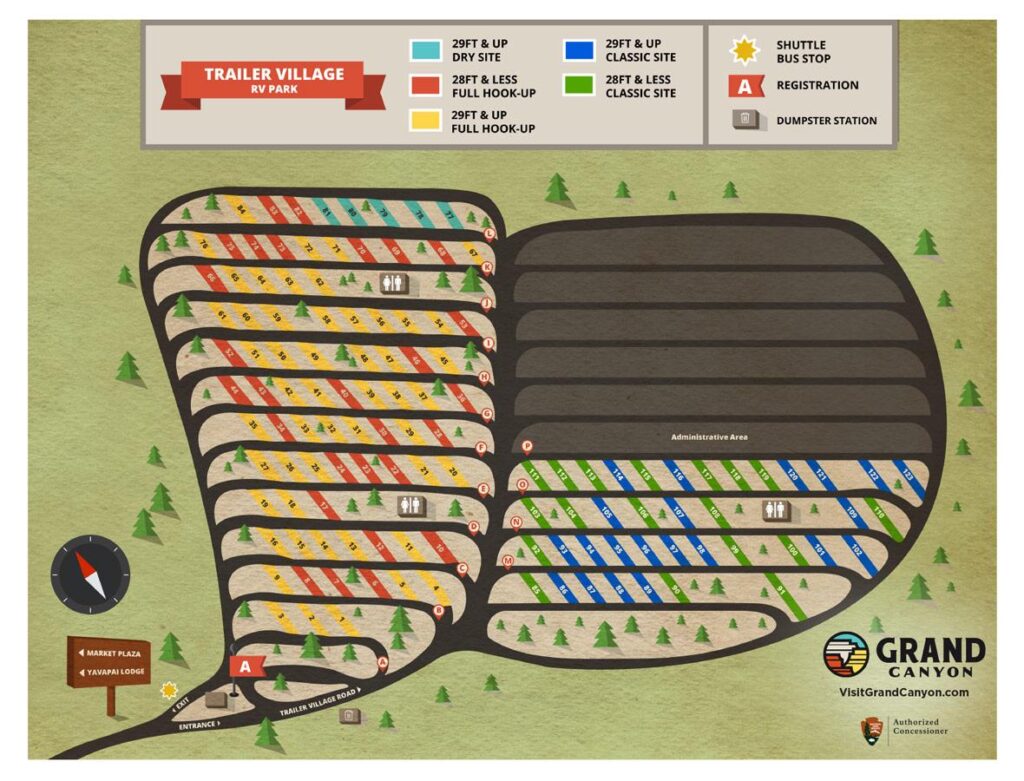
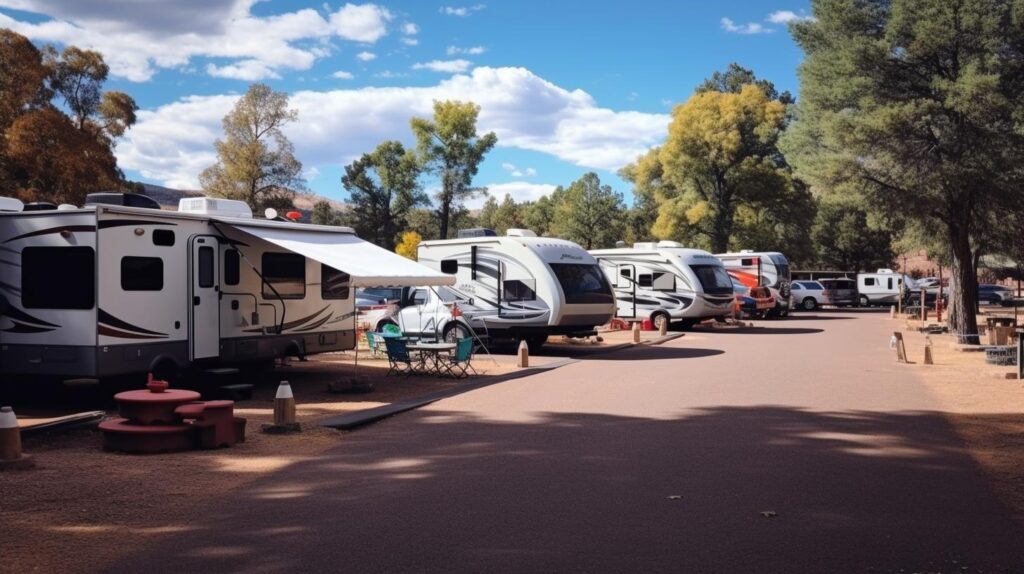
At the South Rim, which is the most RV-friendly area, you’ll find a few key campground options that cater to different types of travelers. Trailer Village is the most comfortable choice, offering full hookups and paved sites that can accommodate larger rigs. It feels more like a traditional RV park, but with the rare advantage of being located inside a national park.
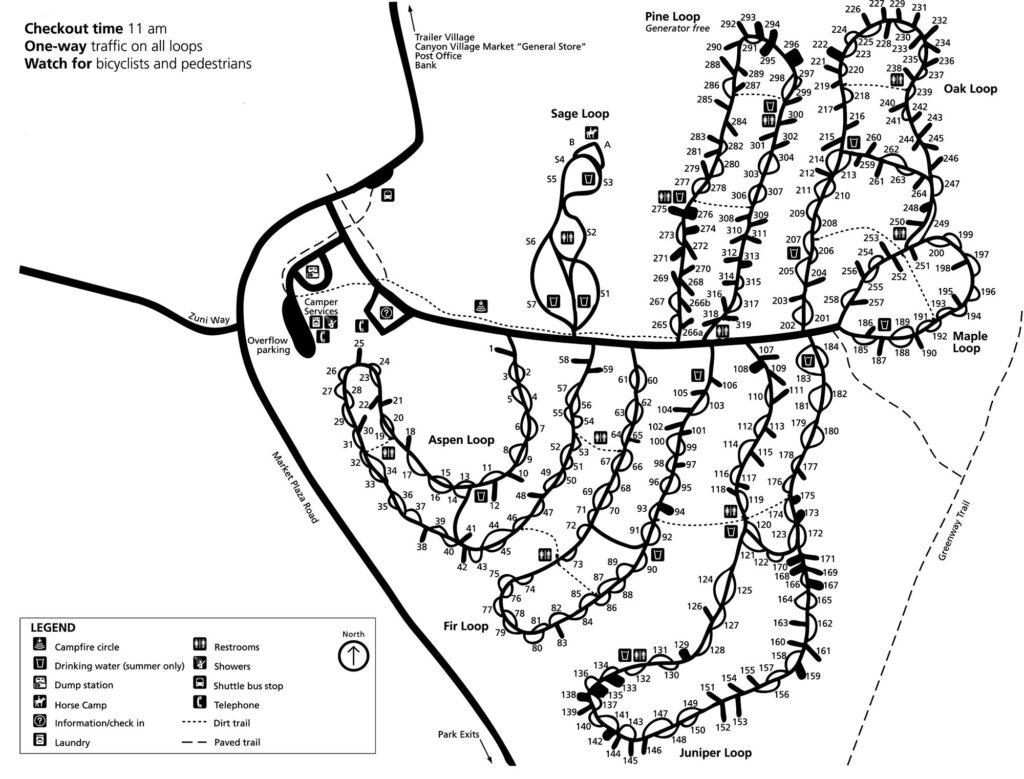
Mather Campground, on the other hand, offers a more classic camping experience. Here, your RV is tucked among trees, often with more space between sites, and while you won’t have hookups, you’ll still have access to water and dump stations nearby. It feels quieter, more connected to nature, and is often the preferred choice for travelers who don’t mind a bit of simplicity.
Further east, Desert View Campground offers an even more peaceful alternative. It’s smaller, more rustic, and tends to attract travelers who are intentionally seeking a slower, quieter stay. The trade-off is that it has stricter size limits and fewer amenities, but many RV travelers find that’s exactly the appeal.
What makes staying inside the park so special isn’t just convenience—it’s timing. You can walk or take a short shuttle ride to viewpoints at sunrise without worrying about traffic or entry lines. You can stay out late for stargazing without thinking about the drive back. And during the busiest months, when parking fills quickly, you already have your spot secured.
That said, this convenience comes at a cost—not just financially, but in planning. Campgrounds inside the park fill up quickly, sometimes months in advance, especially between late spring and early fall. Sites can also feel tighter, and rules around generators, quiet hours, and vehicle movement are more strictly enforced than in many private campgrounds.
Staying Outside the Park: A Different Kind of Freedom
For many RV travelers, staying outside the park is not a compromise, it’s a strategic choice.
Just south of the entrance, the small town of Tusayan serves as the closest and most convenient base. Here, you’ll find several RV parks with full hookups, easier reservations, and a more relaxed atmosphere. The drive into the park typically takes about 10 to 15 minutes, making it an excellent balance between access and comfort.
Beyond Tusayan, the surrounding areas open up even more possibilities. The Kaibab National Forest offers dispersed camping options where you can stay for free, often surrounded by quiet forest rather than crowds. These spots don’t come with amenities, but they offer something equally valuable—space, solitude, and a sense of independence that many RV travelers are looking for.
Further out, towns like Williams and Flagstaff provide full-service RV parks, grocery stores, fuel stations, and restaurants. While the drive into the canyon is longer—anywhere from an hour to an hour and a half—these locations work well if you’re combining your Grand Canyon visit with a larger Southwest road trip.
The biggest difference when staying outside the park comes down to daily rhythm. You’ll need to plan your entry into the park each day, especially during peak season when entrance lines can build quickly. Early mornings become more important, not just for catching sunrise, but for avoiding congestion.
However, many travelers appreciate the trade-offs. Campsites are often larger and easier to book, hookups are more readily available, and the overall pace can feel less restrictive. After a full day exploring, returning to a quieter, less crowded campground can actually enhance the experience.
Driving Into the Park: What to Expect Day-to-Day
If you choose to stay outside the park, your daily experience will revolve around entering, parking, and navigating the South Rim efficiently.
During peak travel months, especially summer, the entrance stations can back up mid-morning. Arriving early—ideally before 9 a.m.—makes a noticeable difference. Once inside, parking near major viewpoints can fill quickly, which is why many experienced travelers adopt a simple strategy: park once, then rely on the shuttle system.
The shuttle buses at the South Rim are frequent, easy to use, and connect most of the major viewpoints, trailheads, and visitor areas. For RV travelers, this is a major advantage. Instead of navigating tight parking areas with a large vehicle, you can leave your car in a central lot and move freely throughout the park.
It’s also worth noting that fuel, food, and supplies inside the park are limited and often more expensive. Many travelers find it easier to stock up before entering for the day, especially if they’re coming from a nearby town.
Choosing the Right Option for Your Trip
The decision between staying inside or outside the park isn’t about right or wrong—it’s about what kind of experience you want to create.
If your goal is to fully immerse yourself in the Grand Canyon, minimize driving, and have easy access to early mornings and late evenings, staying inside the park is hard to beat. There’s a simplicity to it. You arrive, set up camp, and everything you came to see is already within reach.
If, on the other hand, you value flexibility, space, and comfort—or if you’re planning a trip on shorter notice—staying outside the park can be the better choice. It gives you room to breathe, often at a lower cost, while still keeping the canyon easily accessible.
Many RV travelers also take a hybrid approach, staying outside the park for most of their trip and, if possible, booking a night or two inside to experience the canyon at its quietest.
A Realistic 3-Day RV Experience
No matter where you stay, the structure of your visit will likely follow a similar flow.
Your first day is often about arrival and orientation, getting settled, exploring a few nearby viewpoints, and experiencing your first sunset. The second day is where you dive deeper, whether that means walking sections of the Rim Trail, taking the shuttle to different viewpoints, or simply spending more time observing how the canyon changes throughout the day. By the third day, many travelers opt for a scenic drive along Desert View Drive, stopping at overlooks that offer a slightly different perspective before continuing on their journey.
What matters most isn’t how much you see, but how you experience it. The Grand Canyon isn’t a place you rush through—it’s a place you return to throughout the day, noticing something new each time.
The Experience You Choose
The Grand Canyon National Park is one of those destinations that adapts to how you travel. Whether you’re parked inside the park, stepping out of your RV just minutes from the rim, or driving in each morning from a quiet forest campsite, the canyon delivers the same sense of scale, wonder, and perspective.
Staying inside the park offers immediacy and immersion.
Staying outside offers flexibility and space.
Both lead to the same destination, standing at the edge of something vast, ancient, and unforgettable. In the end, that’s what belongs on your bucket list.